
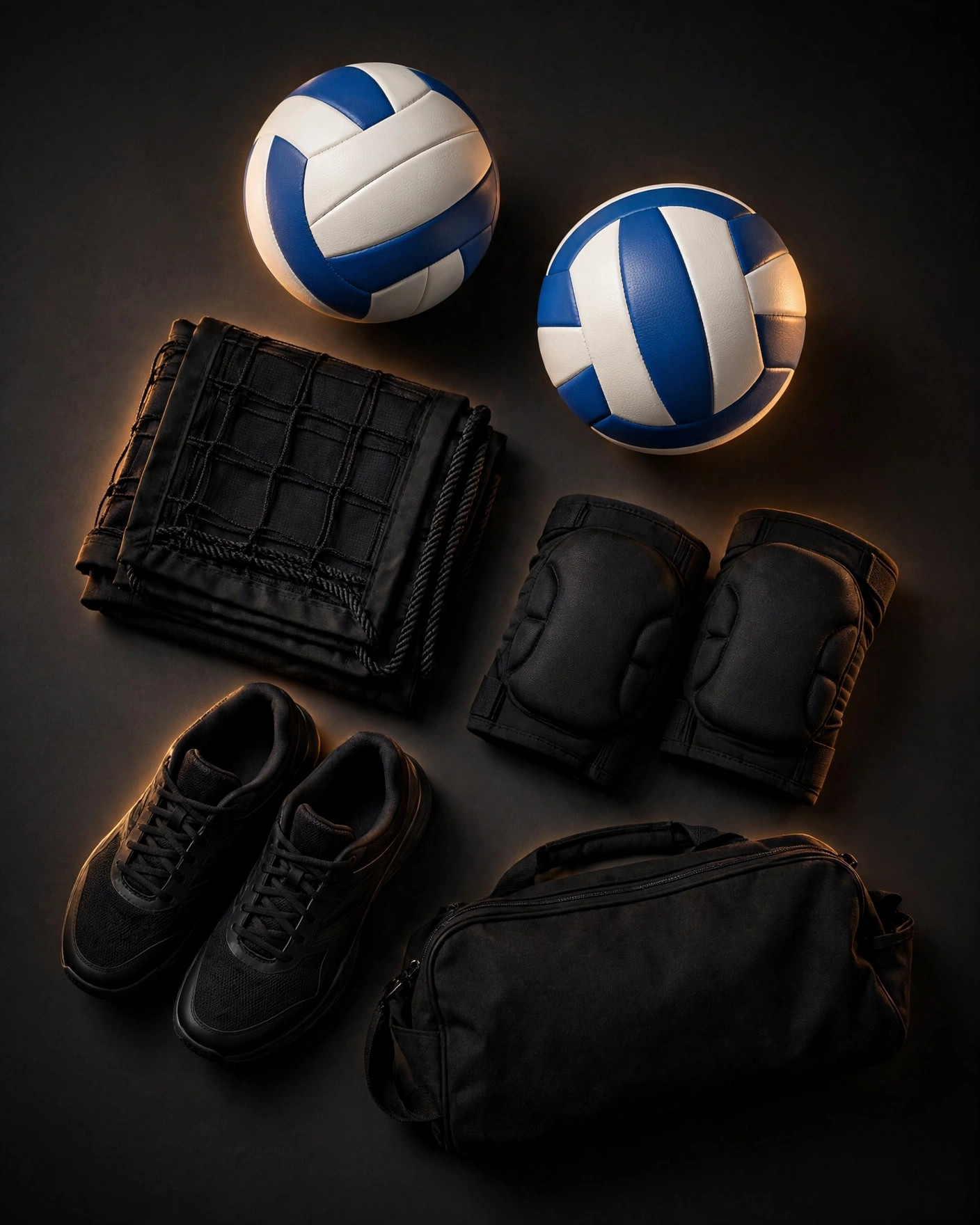

Whether you are equipping a school gym class, a community club, or a weekend league team, buying the right volleyball matters more than most people expect. The wrong ball bounces oddly, wears out fast, or feels wrong for the age group playing with it. Here is a simple guide for clubs and schools shopping for volleyball equipment in Brampton and across the GTA.
Indoor vs Outdoor: Pick the Ball for Where You Play
Indoor volleyballs are made for gym floors: they have a softer touch, a consistent bounce, and a cover designed for indoor courts. Outdoor volleyballs are built tougher to handle concrete, grass, sand, and weather, with a more durable cover that resists scuffs and moisture. If your team plays mostly indoors, buy an indoor ball; if your games move outside in the warmer months, an outdoor ball will last far longer. Many clubs in Canada keep both — indoor balls for the school season and outdoor balls for summer leagues and beach sessions.
Ball Size and Weight: Match the Players, Not Just the Game
A standard adult volleyball (size 5) suits high school players, adults, and club teams. Younger players do better with a lighter, slightly smaller ball that is easier to serve, pass, and control while they build technique. Buying the right size for the age group keeps rallies going longer and makes practice more enjoyable, which matters most for school programs where beginners are learning the basics. When in doubt, ask in store — a quick hands-on check beats guessing from a listing online.
Cover Material and Feel: What to Look For
Most volleyballs use a synthetic leather or composite cover. Softer composite covers give a better feel on passes and sets and are kinder on forearms during long practices, while harder covers stand up better to rough outdoor surfaces. Check the stitching and the valve, too: a well-made ball holds its shape and air pressure through a full season of practices and games. A ball that goes soft every week is a false economy, even at a low price.
How Many Balls Does a Club or School Need?
For a single team practice, plan on at least one ball per two or three players so drills keep moving without long waits. A school program running several classes or a club with multiple teams should stock a full set, plus a couple of spares — balls go missing, and a flat ball should never stall a session. Buying together also makes it easier to keep every ball the same model, so players get a consistent touch across every practice and match.
Nets, Pumps, and the Extras That Get Forgotten
A good ball is only part of the kit. Clubs and schools should also keep a reliable pump and a pressure gauge on hand, because a correctly inflated ball plays far better than a soft one. Carry bags keep a full set together between the storage room and the gym, and a spare net or antenna set matters for outdoor setups. Budget for these small extras alongside the balls themselves — they are the items coaches always wish they had bought sooner.
Where to Buy Volleyball Equipment in Brampton & the GTA
If you are shopping for volleyball equipment in Brampton, visit a local sports supplier where you can feel the ball, check the size, and ask about club and school quantities in person. FIPCO Suppliers in Brampton stocks volleyballs and sports gear for players, clubs, and schools across the GTA — including the Nivia Spikester volleyball at $25 CAD — alongside cricket, pickleball, badminton, and soccer equipment, so you can compare options in store instead of ordering blind.
FIPCO Suppliers, Dockside Court, Brampton, 647-573-0547, open daily 10:00 AM – 9:30 PM, Thefipco.com
← Back to Blog